
People & relationships
How to keep client notes you’ll actually use
A client shouldn’t have to tell you the same thing twice. A few useful notes can help you pick up the conversation where you left off.
Start here
After a conversation, write down the detail that matters, the decision you made and the next step. Keep it with the person, then give anything time-sensitive a reminder.
Write for your next conversation
Imagine opening the note five minutes before you meet again. What would you be glad you remembered? Usually it’s a preference, a decision or a promise. A transcript of the whole conversation makes those details harder to find.
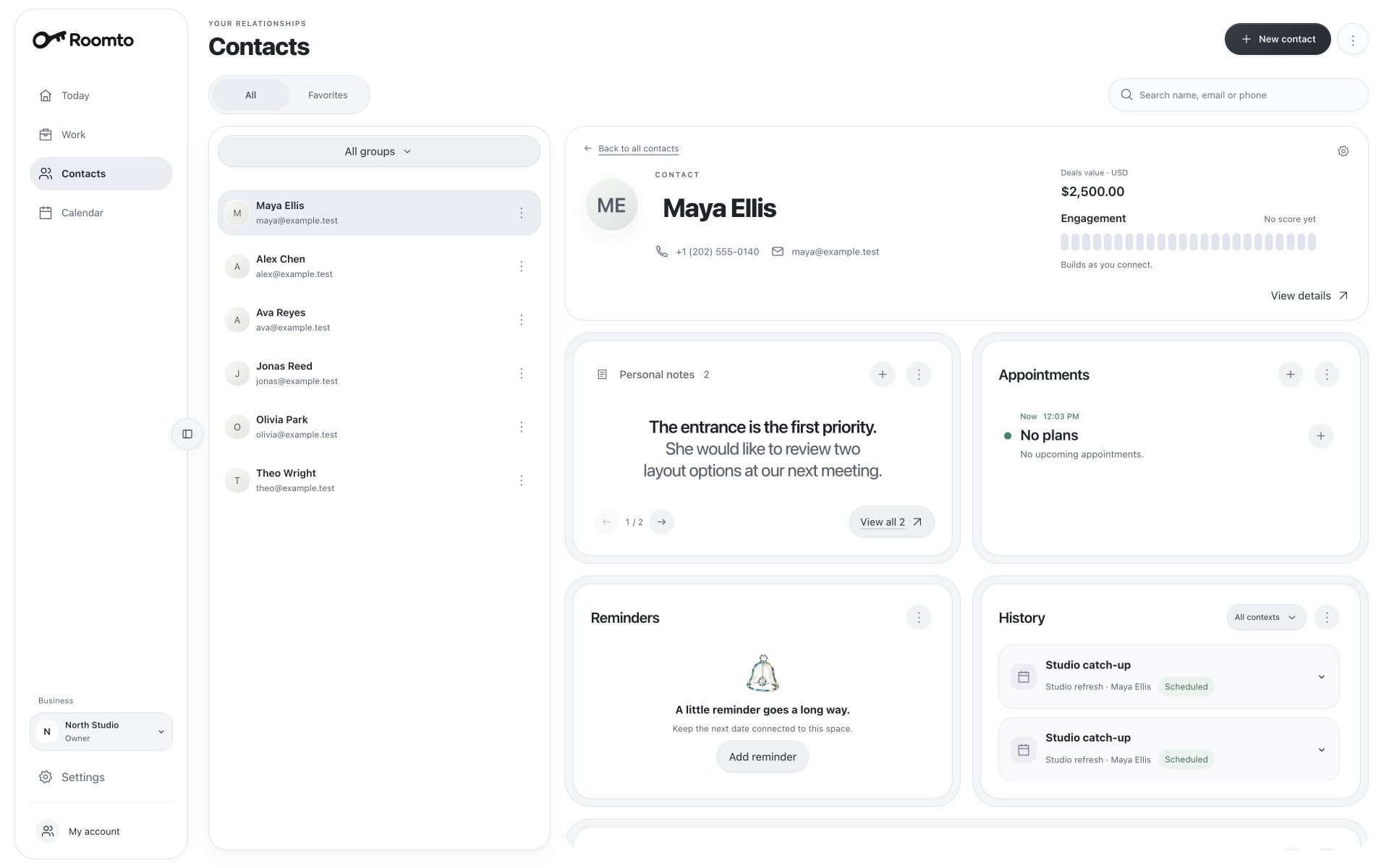
“Discussed the project” tells you almost nothing. “The entrance is the first priority; bring two layout options on Friday” tells you what the person cares about and what you need to do. Aim for that level of detail.
Start with three short prompts. You can use them in a notebook, a document or a contact record. The format matters less than being able to find the answer when you need it.
- What matters to this person?
- What did we decide or promise?
- What happens next, and when?
Keep the person and the project connected
Some details belong to a relationship: a preferred way to communicate, a name they use or something they asked you to remember. Other details belong to a particular job: the materials, scope, delivery date or approval you are waiting for.
In the Roomto preview, personal notes live with the contact and work notes live with the connected work. In Maya’s example, the entrance preference is useful context on her contact record. The material choices for “Studio refresh” belong with that project.
You don’t need to paste the same conversation into both places. Put the detail where you would look for it and use the connection between the person and the work to move between them.
Turn a promise into a next step
A note helps you remember what happened. It doesn’t necessarily bring you back at the right time. If you promised to send the layouts before Friday, give that action a reminder. If you agreed to meet, put the meeting in the calendar.
Use a specific action: “Send Maya the two entrance layouts” is easier to act on than “Follow up.” If you are waiting for her answer, make that clear too. Your next step might be to check in after the date she gave you.
Roomto’s current preview supports notes, reminders and appointments. You create these yourself. An assistant that suggests or carries out follow-ups is part of our future direction; this guide doesn’t depend on that automation.
Keep the useful detail, let the rest go
Before the next conversation, read the most recent note. Afterwards, add the new decision and update anything that changed. If Maya chooses a layout, the next note should say which one she chose, rather than leave you wondering whether the choice is still open.
Personal context can make a conversation warmer, but you don’t need a biography of everyone you meet. Record what is relevant and appropriate for your relationship. Avoid guesses about someone’s private life or details you have no reason to keep.
For a florist, a useful note might be a customer’s requested color palette. For an agency, it might be who approves the work. For a returning salon client, it might be the style they asked you to remember. The same three prompts work without making every relationship feel like a sales process.
Try it with one conversation today
Choose one person you expect to speak with again. Write three lines using the prompts above. Add a reminder only if there is a real action or an agreed time to reconnect.
At the next conversation, see whether the note helped. If you still had to search through messages, add the missing detail. If you didn’t use most of what you wrote, make the next note shorter. You’re building a habit that helps you pay attention, not another document to maintain.
 Take a closer look
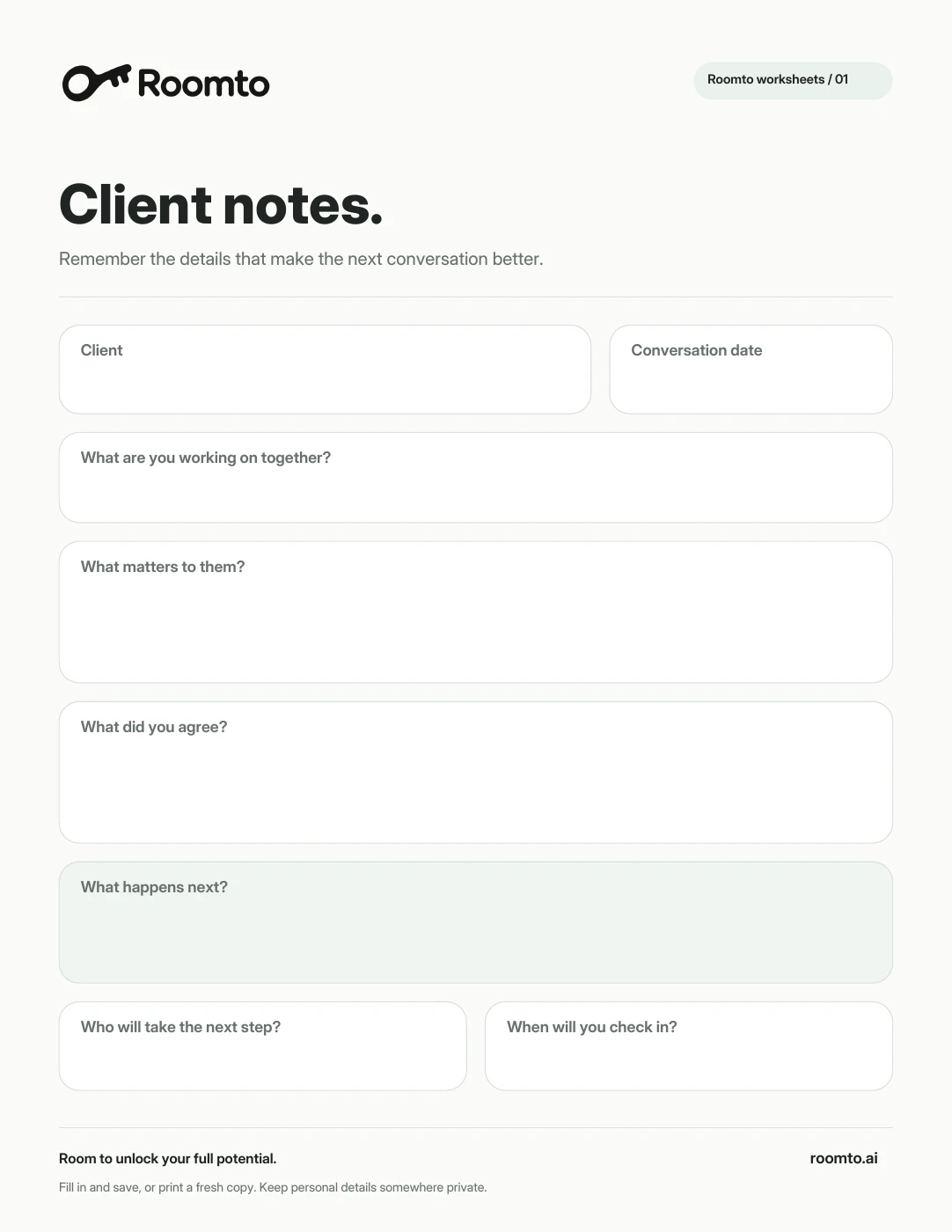
Free worksheet Fillable PDF · 1 page
Client notes, made yours.
Keep the personal details, decisions and next steps together.
Download a copy to fill in and save, or print it and put pen to paper.
Download PDF Prefer plain text?A couple of useful details.
How much should I write after a client call?
Start with a few sentences covering what matters, what you agreed and the next action. Add detail when the situation needs it, but keep the decision and next step easy to find.
Is a client note the same as a reminder?
No. A note holds context. A reminder brings an action back to your attention at a chosen time. Use both when a conversation includes a promise or deadline.